Turkey Blocks Access to Popular Online Game Platform Roblox

Photo: Veryinformed / Unsplash

A court in the southern Turkish province of Adana blocked access to Roblox, one of the most popular online gaming platforms in the world, citing dangers to children. “Due to content that could lead to child abuse, access to the game platform called Roblox and its links in app markets has been blocked by the Adana 6th Criminal Court of Peace,” Justice Minister Yilmaz Tunc said on Wednesday.

Tunc added that Turkey will continue to take measures to “to ensure the protection of our children according to our Constitution”.

Roblox is a gaming platform that allows its users to create and publish their own games. The platform is also an online meeting hub for its users, often teenagers.According to Euronews Turkish, Turkey has the fifth highest number of people in the world using Roblox.

The access block follows similar decisions imposed by the government in the past month. The popular global story-sharing platform Wattpad has been banned in Turkey “for the protection of children” and “public order” since July 16, making it the first country to impose such a restriction.

Most recently, Turkey’s Information and Communication Technologies Authority, BTK, the national communications regulator, blocked access to Instagram on August 2 without stating the reason or duration of the ban.

The ban came after the presidency’s communications director, Fahrettin Altun, accused Instagram, which is owned by META, of censorship of content about Hamas leader Ismail Haniyeh’s assassination in Iran, linked to Israel. “This is censorship, pure and simple,” Altun said on X, adding that Instagram had not cited any policy violations for its action.

Turkey later announced that Instagram had been blocked over its failure to remove illegal content on matters such as “the sexual abuse of a child”, for insulting Mustafa Kemal Ataturk, the founder of modern Turkey, and over items on “gambling and drugs”. Officials said Instagram had been warned to remove such content but it failed.

Turkey has passed a number of draconian laws and regulations that give the government greater control on digital platforms.

It has previously blocked many social media platforms, including YouTube, Threads, EksiSozluk, Wikipedia, Twitter and TikTok. It has also imposed social media and broadcasting bans following disasters, terror attacks and social unrest.

Turkey Keeps Access Ban in Place on Instagram

Display of smartphone shows frozen Instagram application, in Berlin, Germany, 04 October 2021. Photo: EPA-EFE/FILIP SINGER

Turkey’s Minister for Transport and Infrastructure, Abdulkadir Uraloglu, said Instagram had not met conditions to lift the access block imposed on August 2. “We did not get exactly the result we wanted, we are following up and actively discussing.” Uraloglu said on Monday.

Media outlet Haber Global said Turkey had put a list of demands to Instagram in a meeting.

“The delegation headed by Uraloglu emphasised that messages of support for the [Kurdish militant groups] PKK, PYD and FETÖ [Ankara’s name for exiled Turkish preacher Fethullah Gulen’s network], which are on Turkey’s list of terrorist organisations, should also be blocked by algorithms,” it wrote.

Reportedly, the Turkish side also “criticised the algorithms blocking messages of condolence published by Turkish officials for Hamas Political Bureau Chief Ismail Haniyeh”, following his recent assassination in Iran, which has been linked to Israel.

Turkish President Recep Tayyip Erdogan meanwhile accused Instagram and other social media platforms of “digital fascism” for allegedly blocking criticism of Israel. “They consider even a simple sentence criticising Israel as an insult. We are facing digital fascism,” Erdogan said on Monday.

Turkey’s Information and Communication Technologies Authority, BTK, the national communications regulatory agency, blocked access to Instagram on August 2 without stating the reason or duration of the ban.

The ban came after the presidency’s communications director, Fahrettin Altun, accused Instagram, which is owned by META, of censorship of content about Haniyeh’s assassination, calling him a “martyr”. “This is censorship, pure and simple,” Altun said on X, adding that Instagram had not cited any policy violations for its action.

Turkey later announced that Instagram had been blocked over its failure to remove illegal content on matters such as “the sexual abuse of a child”, for insulting Mustafa Kemal Ataturk, the founder of modern Turkey, and over items on “gambling and drugs”. Officials said Instagram had been warned to remove such content but it failed.

Turkey has passed draconian laws and regulations that give the government greater control on digital platforms.

Under Erdogan, it has previously blocked many social media platforms, including YouTube, Threads, EksiSozluk, Wikipedia, Twitter and TikTok. It has also imposed social media and broadcasting bans following disasters, terror attacks and social unrest.

Users in Turkey cannot currently access Instagram via web and mobile applications but access is still possible via VPN services.

“Millions of people are being deprived of their everyday ways of connecting with family and friends, and business are no longer able to reach their customers,” a META spokesperson said on Monday adding that META is doing everything to restore Instagram in Turkey.

According to the Istanbul Planning Agency, IPA, the municipal statistical agency, Turkey’s recent decision to block Instagram could lead to daily economic losses of about 1.9 billion Turkish liras or some 52.1 million euro.

Fugitive Moldovan Oligarchs Exploit Online Weaknesses to Spread Disinformation Before Elections

Moldova’s online space – websites and social media platforms – is not regulated, unlike TV and radio, where the state has strong control over outlets’ ownership and funding through the country’s Audiovisual Council. Police investigate online hate speech or threats, but not disinformation and intentionally fake news.

A recent report by Watchdog Community, a think tank in Chisinau, said the fugitive Moscow-linked oligarchs Ilan Shor and Veaceslav Platon spent about 136,000 euros on Facebook promotions in June, July and August. 

According to the report, these sponsored campaigns aim to sow panic in society, discredit the European integration process of Moldova and “whitewash” Russia’s image.

“Russia is actively preparing for destabilisation during the presidential election campaign and the referendum on European integration,” it said.

Ilan Shor, the mastermind of the “Grand Theft” of one billion US dollars from the Moldovan banking system, is currently hiding in Moscow. Veaceslav Platon, the mastermind behind the “Russian Laundromat”, which laundered over $20 billion dollars in Moldova, is hiding in London.

According to DataReportal, Moldova currently has 2.14 million Internet users and 1.58 million users of social networks. About 73.6 per cent of these internet users used at least one social media platform in the first month of 2024. 

The most popular platforms are TikTok, Facebook, and Instagram. At the beginning of 2024, Facebook had 1.30 million users. Between January 2023 and January 2024, 100,000 new users registered on the platform.

Meta, the company that owns Facebook and Instagram, has argued that for the past two years, it has used enforcement tactics against influence operations – both covert and overt – and continues to monitor for attempts to manipulate public debate around the world, particularly ahead of elections.


Fugitive oligarch Ilan Shor, former leader of the now-outlawed Shor Party, at a press briefing in February 2019. Photo: EPA-EFE/Dumitru Doru

Promoting Kremlin narratives

Internet pages sponsored by Shor and Platon often feature content related to the classic themes of Russian propaganda in Moldova, and are currently focused on the presidential elections and the referendum on EU integration that both take place on October 20.

“These disinformation campaigns can have a powerful impact on the results of the polls this fall and especially on the constitutional referendum,” the director of WatchDog Community, Valeriu Pasa, said.

The WatchDog Community report notes that Shor and Platon are sponsoring Facebook posts on various pages associated with them, promoting the idea that the referendum on the EU is useless and that its results will have no impact at all on the EU accession process.

“The idea is [also] promoted that the central government is imposing unjustified sanctions on the [mostly pro-Russian autonomous] Gagauzia region, thus undermining local stability. It is argued that the authorities are exaggerating military risks [from Russia] to gain political advantage, denying real threats to national security,” the report said.

The report presents other false narratives being promoted, including that the current government accepts any condition imposed by the EU, that Moldova is a “colony of the West”, and that the leadership of Moldova are “puppets of the West”.

“The false narratives say that the Moldovan government would unconditionally accept all EU requirements to receive European funds, implying a lack of sovereignty and discernment in the negotiation process,” the report stated.

The director of the think tank, Valeriu Pasa, believes that this campaign in the online environment is strongly influenced by fake news and conspiracies spread by Russia and its agents of influence in Moldova.

Pasa urges Moldova’s media to publish as much truthful news stories as possible, including reliable information and figures about EU integration, comparing the standard of living, incomes, and quality of life of people in Russia and the European Union.

“This will help create an objective opinion based on facts and not lies. Secondly, it is essential that information about fakes is present in the news and the press,” the expert said. 


Natalia Morari, partner of the fugitive Moldovan oligarch Veaceslav Platon, at her launch as an independent candidate for the 2024 presidential elections. Photo: EPA-EFE/Dumitru Doru

Money spent on disinformation

Shor alone promoted at least 104 ads through 11 Facebook pages between July 1 and 30, spending 30,500 euros on them. 

According to the report, the number of his sponsored ads increased in July by 20 compared to the period from June 1 to 30, though the budget for them remained unchanged. In the week of July 24 to 30, Shor spent some 4,741 euros on advertising promotion. 

“Three pages belong to ‘Renaissance’ Party members, officially supported by Ilan Shor: Veaceslav Jucov, Vasile Bolea and Alexandr Nesterovschi. The rest of the pages use a similar visual identity and have profile photos with the Moldovan flag and usernames that allude to either media organisations or patriotic organisations,” the report notes.

Platon promoted around 82 advertisements between July 1 and 30 on his own personal Facebook page and that of his partner, former journalist Natalia Morari, who is running in the presidential elections. Platon spent about 19,500 euros. In the week of July 24 to 30, Platon spent approximately 3,600 euros on promoting ads on the two pages.

“In the public space, the two oligarchs continue to promote a positive image of the Russian Federation, using various media tools and personal relationships,” the report states.

In addition to buying sponsored ads on Facebook, Platon also actively promotes content on YouTube and through Google Ads.

The Watchdog Community report, by monitoring public opinion manipulation campaigns and using polls it recently commissioned, concludes that this paid-for content has affected the public opinion of Moldovan citizens.

“We are seeing a very high impact of disinformation campaigns and manipulation of public opinion. They aim first and foremost at the referendum on accession to the European Union,” Valeriu Pasa said.

Facebook owner Meta has made efforts to block fake news from, or on, Moldova. 

In a June report, Meta specified that it had eliminated over 1,326 Facebook accounts, 80 pages, a group and an Instagram account, deemed to be part of a disinformation network aimed at the public in Moldova. The messages came from Shor or his right-hand deputy, Marina Tauber, who both are hostile to the pro-European government.

Wired magazine, a US monthly, reported earlier this year that Shor had managed to place “political advertising” on Facebook ahead of Moldova’s November 2023 local elections, long after he had been stopped from doing so as a person under US bans.

Wired wrote that Meta earned more than $200,000 from a Facebook campaign in which last summer and autumn Shor promoted pro-Kremlin views and sought to influence public opinion in the November 2023 elections.

The Intelligence and Security Service of Moldova, SIS, has stated that it sent Meta a list of accounts that promote disinformation, especially during elections, as early as 2023.

Meta has said it is working with the Centre for Strategic Information and Countering Disinformation, a Moldovan government-run unit. However, the social media company did not respond by the time of publication to BIRN’s questions about increased advertising spending by pages affiliated with Shor and Platon that contain anti-EU messages.

Turkey Blocks Access to Instagram Without Official Explanation

Photo Illustration: Brett Jordan/Unsplash

Turkey’s Information and Communication Technologies Authority, BTK, the national communications regulatory agency, blocked access to Instagram on Friday without stating the reason or duration of the ban.

“Instagram has been blocked by a decision dated 02.08.2024,” the BTK wrote on its website without giving further information.

The ban has come after the Turkish presidency’s communications director, Fahrettin Altun, on Wednesday accused Instagram, which is owned by Meta, of censorship of content about Hamas leader Ismail Haniyeh’s assassination in Iran calling him a “martyr”.

“This is censorship, pure and simple,” Altun said on X, adding that Instagram had not cited any policy violations for its action.

However, there is no certainty that Instagram has been blocked over content removal on Haniyeh’s death, which led President Erdogan to declare a day of mourning on Friday.

The independent media platform Medyascope reported on Friday that Instagram had been blocked over its failure to remove illegal content on matters such as “the sexual abuse of a child”, “Insulting [Mustafa Kemal] Ataturk [founder of Turkey],” and items on “gambling and drugs”.

A BTK official anonymously told Medyascope that it had warned the social content provider to remove such content.

“There are certain periods of time [given] for this. If it [the offending material] is not resolved within this period, we have the right to block access,” the BTK official was quoted as saying.

Turkey has passed draconian laws and regulations that give the government greater control on digital platforms.

Under Erdogan, Turkey has previously blocked many social media platforms, including YouTube, Threads, EksiSozluk, Wikipedia, Twitter and TikTok. It has also imposed social media and broadcasting bans following disasters, terror attacks and social unrest.

Users in Turkey cannot access Instagram via web and mobile applications since the ban was imposed on Friday morning. Access is still possible via VPN services.

North Macedonia Baffled by Venezuelan Claims of ‘Hacking Attack’


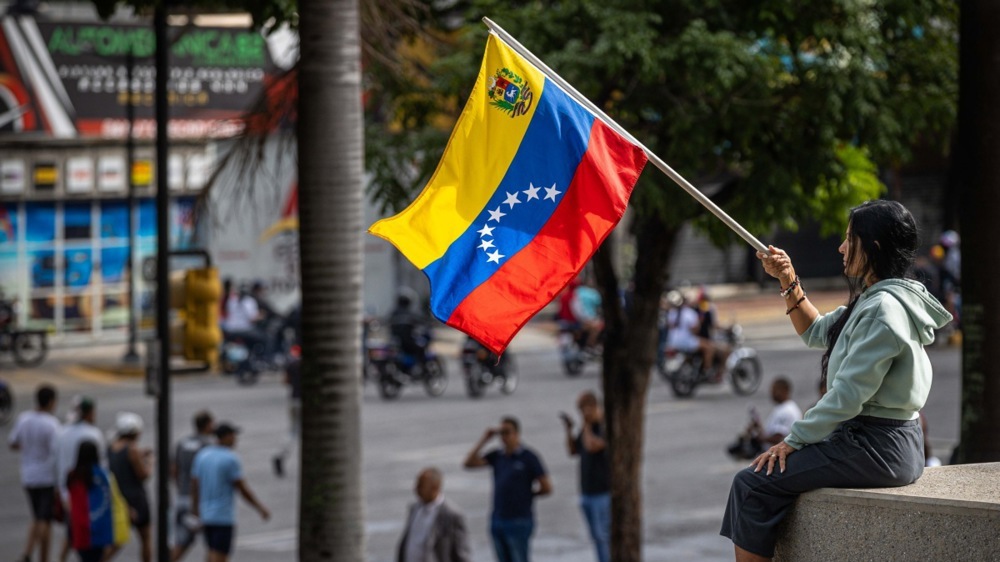
A woman holds a flag during a protest against the results of the presidential elections in Caracas,Venezuela, 29 July 2024. Photo: EPA-EFE/Henry Chirinos

North Macedonia says it has not received any evidence that hackers from the country were involved in meddling in Venezuela’s hotly disputed election.

Digital Society Minister Stefan Andonovski on Tuesday said that, apart from Venezuelan allegations, the “authoritarian regime” in Caracas had not produced any proof. “We are carefully monitoring the process,” Andonovski said.

“The ministry is not an investigative body but we will make sure that no one is accused in our country without having adequate evidence for it, and that we are not involved in internal political battles between an authoritarian regime that has existed for years in that country and the opposition there,” Andonovski added.

After presidential elections on Sunday, which the regime in Venezuela claimed to win, its Chief Prosecutor, Tarek William Saab, said on Monday that an inquiry had been launched against opposition leader Maria Corina Machado and several of her associates for alleged involvement in a hacking attack against the National Electoral Council’s data transmission system.

“The hacker attack came from North Macedonia,” Saab added, without showing any evidence, adding that this attack, allegedly coordinated by Venezuelan opposition leaders, had “the intention of manipulating data that was being received by the National Electoral Council.”

North Macedonia’s Foreign Ministry and interior Ministry have not reacted to the claims.

However, a former high-ranking Foreign Ministry official told BIRN on Tuesday under condition of anonymity that, “knowing the source of these allegations, I would not be surprised if our country is just being used by the Venezuelan authorities as convenient alibi for what is happening there.”

Apart from Cuba and Russia, most countries have greeted the official results of the Venezuelan election with scepticism, mainly because the authorities did not allow independent election observers.

According to the official results, President Nicolas Maduro won 51.2 per cent of the vote against the opposition candidate Edmundo Gonzalez Urrutia’s 44.2 per cent.

The opposition has disputed the results, accusing Maduro of fraud. Machado said they had evidence that their candidate won 70 per cent of the votes, not 44 per cent.

On Tuesday, protests and violent clashes erupted in many Venezuelan towns and cities. Meanwhile, neighboring Argentina, Costa Rica, Ecuador, Guatemala, Panama, Paraguay, Peru, Dominican Republic and Uruguay expressed serious doubt about the transparency of the election process and requested an urgent meeting of the Permanent Council of the Organization of American States, OAS, to safeguard “the will of the people”.

In response, Saab, a close ally to Maduro, downplayed these concerns as “attempts at interference and reckless statements made by a few Latin American governments.”

The EU and US also expressed strong doubt about the election results. The EU’s High Representative, Josep Borrell, on Monday said the results “have not been verified and cannot be considered as representative of the will of the people of Venezuela until all the official records from polling stations are published and verified.” He called on the Venezuelan Electoral Council to “exercise maximum transparency.”

North Macedonia is better known as a target of hackers, rather than an exporter. However, in 2016, spammers from the little North Macedonian town of Veles gained cash and notoriety for promoting fake news about Donald Trump on social networks.

North Macedonia Looks to Trump Associates to Aid ‘Digital Transformation’


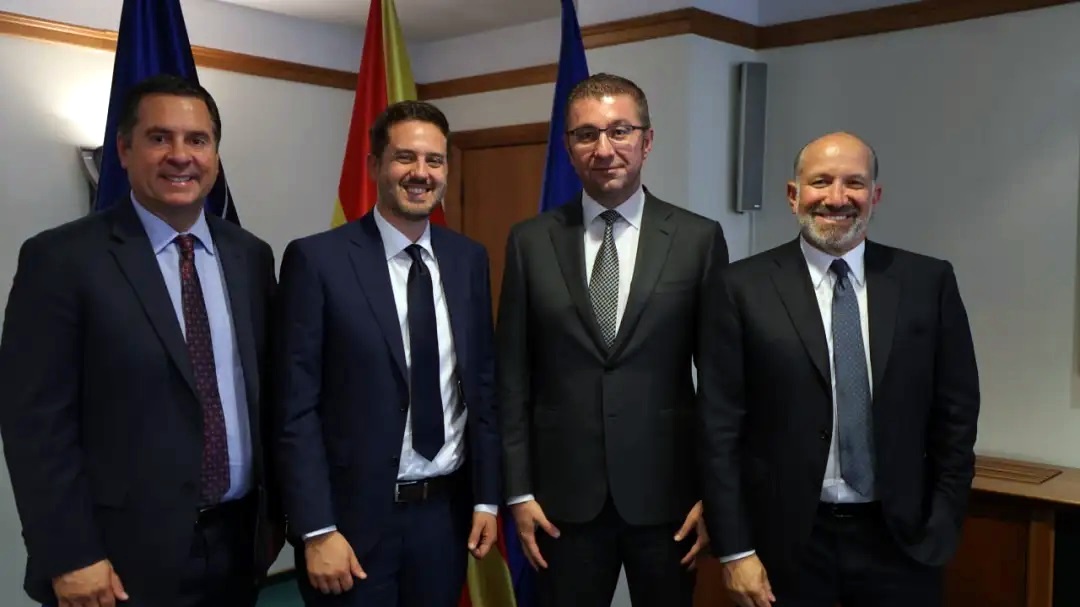
Devin Nunes, Chris Pavlovski and Howard Lutnick met North Macedonia’s PM, Hristijan Mickoski on Monday in Skopje. Photo: North Macedonia’s Government 

North Macedonia’s new conservative Prime Minister, Hristijan Mickoski, said after meeting some of US Republican contender Donald Trump’s close business associates that his government is interested in cooperation with them.

“If we manage to find common interests, why not?” Mickoski told local TV station Telma on Monday, when asked about whether cooperation and possible investments are in sight.

Earlier that day in Skopje he met Chris Pavlovski, CEO of Rumble corporation, Howard Lutnick, CEO of Cantor Fitzgerald finance corporation and Devin Nunes, former California congressman and current CEO of Trump Media & Technology Group.

“For now, I would not reveal this type of details [of cooperation] but I am pleased I had these people today. They will stay here for the next few days and will talk to government teams, divided into two sections. The first is the economic part, and the second is the digitalization and the digital transformation,” Mickoski said.

The meeting, according to an earlier press release, focused on opportunities for cooperation on digital reforms that the country needs to implement to improve services to the citizens, “focusing on digital freedom and transformation of Macedonian society”.

Several opportunities for economic cooperation in various sectors were also discussed, the government press release added.

Mickoski, who came to power after May general elections, said the visit was organised by Chris Pavlovski, a Canadian technology entrepreneur of Macedonian descent. His bio notes extensive experience in online marketing and advertising space. His company, Rumble, is also known for hosting Truth Social, a right-wing social media platform popular among Trump supporters.

“We create technologies that are immune to cancel culture,” the company states on its website, adding: “Join us. We are on a mission to protect a free and open internet.”

Mickoski’s VMRO DPMNE party was formerly headed by the now fugitive exPM Nikola Gruevski who ruled the country for a decade from 2006 to 2016. His government tightened its grip on the local media, among other things by pouring in millions iinto favoured media through government advertisements.

Crypto Scammers Impersonate BIRN’s Reporting Democracy Website


Photo illustration: Kanchanara on Unsplash

Social media users in North Macedonia are being targeted by fake articles impersonating legitimate websites, in an attempt to lure them into a cryptocurrency trading scheme. BIRN’s own Reporting Democracy is among the websites being impersonated by the scammers.

Police in North Macedonia had already issued a warning for users to be careful of such suspicious content, saying such schemes impersonating legitimate websites and displaying clickbait content have been active for at least the past two weeks.

In the case of BIRN’s Reporting Democracy, the targeted users are being encouraged to click on a fake website through a paid ad on Facebook. The fake website is using the same logo and branding as the original site, and contains a made-up interview with the famous Macedonian football player, Goran Pandev.

The catchy headline reads: “The Central Bank of Macedonia Sues Goran Pandev for His Statements on Live Television”.

The fake content then relates how Reporting Democracy was able to obtain a now-deleted live video interview with the football star, in which Pandev, not knowing that he is being recorded, slips out about how he got rich fast by trading cryptocurrency.

The fake article soon starts promoting crypto-trading sites that allegedly made the football player rich and led to the central bank going after him.

Through these fake web pages, users are directed to three alleged platforms for cryptocurrency trading: Nearest Edge, Bitapp24 and Immediate codex.

The fake website uses same logo and branding as original site. Screenshot: BIRN

After opening the website with the alleged trading platform, users are directed to a login that requires the entry of personal data such as name, email and phone number, after which users receive information that “the order” has been placed.

Immediately after that, the sites ask for data from the user’s bank card and the user is asked to buy crypto-currency, with a note written in a smaller font notifying them that they accept the risk of trading.

Other websites and popular entertainment sites in North Macedonia have also been recently impersonated by the same scheme.

North Macedonia’s Police department for computer crime last week issued a warning to internet users, saying this scam has been going on for at least the past two weeks in North Macedonia.

However, the police said this is part of a wider scheme targeting European audiences, and that the content of these sponsored ads is simply being adjusted for local country audiences by misappropriating the names of local celebrities and following a similar pattern.

“These posts most often say ‘deleted interviews because the central bank doesn’t want you to know this secret’, mentioning celebrities from the country, even posting their photos to gain legitimacy. They note that you can acquire cryptocurrencies fast, and that all you need to do is visit the offered URL,” the police said in a statement.

“This link leads to a cryptocurrency trading platform, but there are no official details regarding the registration of the company, no information on jurisdiction, or how to get in touch with the legal entity to which you would entrust your money,” the police said.

Guessing Game: Facebook’s Unpredictable Algorithm Removes Content on Srebrenica Genocide

But the same algorithm, according to experts, is not precise, especially when dealing with small markets like one in Bosnia and Herzegovina. 

A senior assistant at the department of information sciences at Sarajevo’s Faculty of Philosophy, Fedja Kulenovic, said the reason for the content removal is “most probably use of the word ‘genocide’ in social media posts or inside the articles. 

“Since they have automatised systems for content removal, my educated guess is that these cases were connected to the questions of Palestine and Israel,” Kulenovic told BIRN. 

Meta did not reply to BIRN’s query by the time of publication. 


The article deleted by Facebook containing only service information. Photo: Screenshot. 

‘We don’t know what was removed’

Posting content that is deemed to violate Facebook’s rules can have far-reaching consequences for small media outlets, which rely on the platform’s sheer scale to reach an audience and attract advertisers. 

Repeated occurrences of content being flagged as false or misleading can result in a media’s visibility being reduced, or it being locked out altogether.

Sabina Mesic, editor at Tuzlarije news site, from the northern Bosnian city of Tuzla, said Facebook only sends a notification that a post has been removed from their Facebook page, without notifying them what post exactly. 

“In the beginning, we had the possibility of saying if we agreed with their decision, but now we only get a notification that the post was removed and we don’t know what was actually removed,” Mesic told BIRN. 

Several other outlets had a similar experience while reporting on July 11, the annual date of the commemoration of the 1995 Srebrenica genocide victims, held in the eastern Bosnian town. 

Journalists from NEON TV from the town of Kalesija also reported that the content on one of their pages was removed for violating Facebook’s community rules. 

“We shared an article containing service information on weather, traffic and planned construction works, including the announcement of the commemoration in Srebrenica,” Jasmin Pasalic, a journalist with NEON TV, told BIRN. 

The TV station runs two separate Facebook pages, but the same article, which had a cover photo of the “Flower of Srebrenica”, was removed from only one of them. “The article stayed on another page without any issue, and we can’t explain why,” Pasalic added. 

Both Pasalic and Mesic told BIRN that this was not the first time that content was removed from their pages, without any explanation, or logical reasons why. 

“We had an article about the head of Bosnia’s football selection and that article was removed for breaking the rules,” Pasalic told BIRN. “The problem is that when you receive the warnings a few times, there is a possibility that you can be locked out from your page, or the same can be removed,” Mesic said. 

As BIRN previously reported, small media outlets face significant risks when posting content that violates Facebook’s rules, leading to reduced visibility or account lockouts. Facebook’s algorithm, a closely guarded secret, determines content reach through a relevancy score based on numerous signals. Content moderation inconsistencies, especially in Bosnia, exacerbate these challenges, highlighting the need for local understanding and ethical journalism.

Another BIRN report also showed that Facebook’s content moderation faces significant challenges in the Balkans. Despite using a mix of artificial intelligence and human review, Facebook’s tools often fail to accurately assess content in local languages like Bosnian, Serbian, Montenegrin, and Macedonian. While the platform proactively detects and removes a substantial amount of hate speech globally, the specific nuances and context of Balkan languages and cultural issues are frequently overlooked.

This leads to inconsistent moderation, where harmful content sometimes remains online, and benign content is mistakenly removed. The lack of transparency in Facebook’s moderation processes exacerbates these issues, leaving users uncertain about rule enforcement.

Silencing voices from Palestine


Relatives say their final goodbyes to Srebrenica victims. Photo: BIRN.

In its report from December last year, watchdog organisation Human Rights Watch, HRW, warned that Meta’s “policies and practices have been silencing voices in support of Palestine and Palestinian human rights on Instagram and Facebook”. 

From October and November 2023 alone, Human Rights Watch documented over “1,050 takedowns and other suppression of content on Instagram and Facebook that had been posted by Palestinians and their supporters, including about human rights abuses”. It also noted increased censorship of social media since October 7. 

Kulenovic, who often works with media in the cases of social media censorship, has noticed the same increase in Bosnia, as a consequence of imprecise algorithms.

The problem with such an approach, with bots being in charge of content moderation, is that “they can tell content, but not context”, he said. 

“They [algorithms] can be very useful in moderating content, but when they are not written well such algorithms remove content even when it is related to factually proven things, such as the genocide in Srebrenica,” Kulenovic said. 

Turkish LGBTI+ Activist Arrested Over Posts Condemning Attacks on Refugees

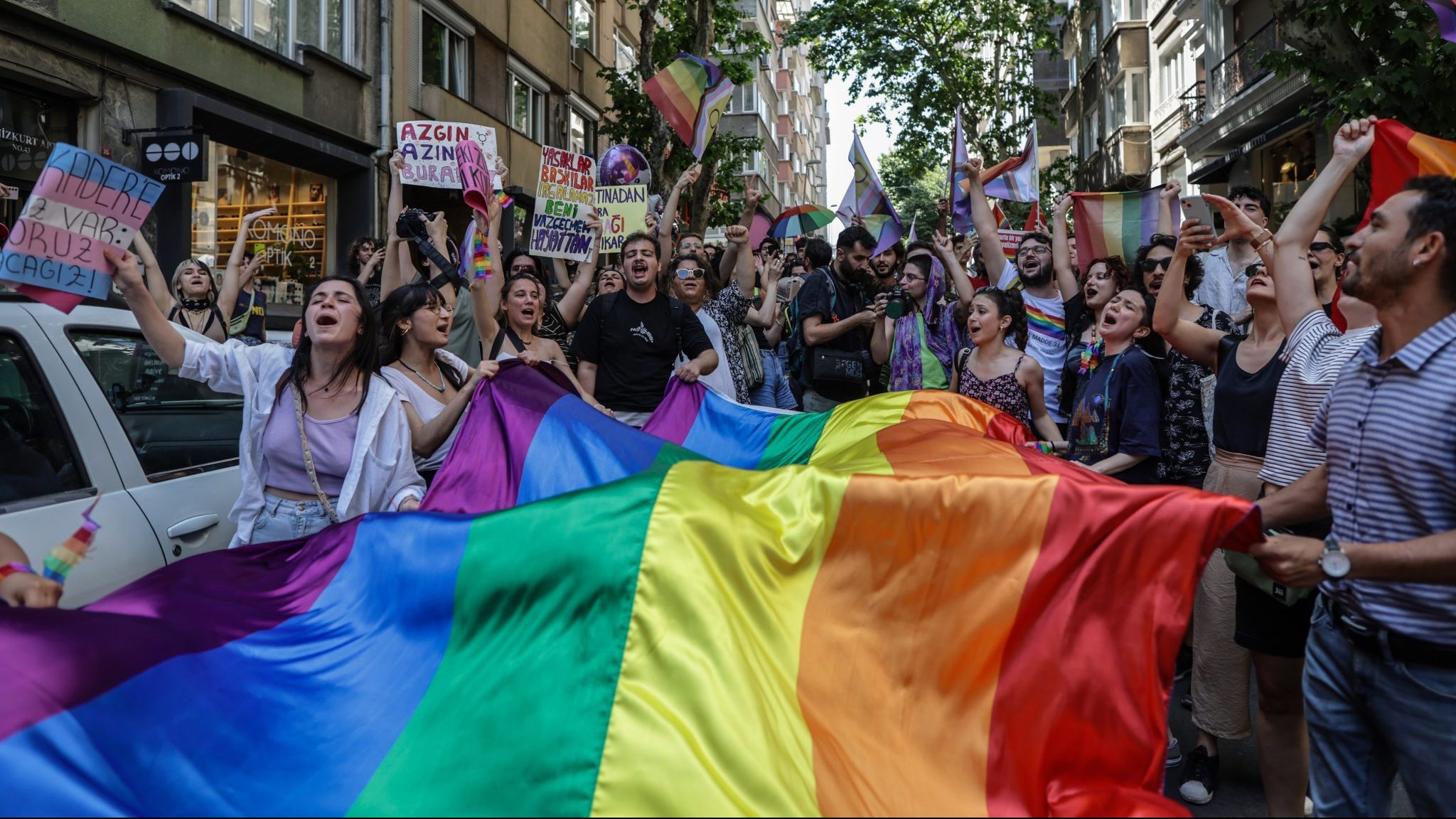
LGBT community members and supporters hold rainbow-coloured flags and shout slogans during the Pride March in Istanbul, Turkey, 25 June 2023. Photo: EPA-EFE/ERDEM SAHIN

An LGBTI+ rights activist and member of the Workers’ Party of Turkey, TIP, Iris Mozalar, was arrested on Thursday over her social media posts condemning violent incidents against refugees in past weeks.

“While those who burned the homes of small children and wanted to carry out massacres were released, I was arrested because I criticized this,” Mozalar told Yesil Gazete before she was arrested on court orders for “inciting hatred and animosity among the public”.

In her social media posts, Mozalar opposed recent attacks on refugees and defended everyone’s right to live “happily and equally”.

Turkey has seen violent anti-migrant and anti-refugee protests in recent weeks following an alleged child abuse case in Kayseri province that involved Syrian refugees. Angry protesters raided shops owned by Syrian refugees and set fire to several vehicles in the city.

President Recep Tayyip Erdogan condemned the violence as “vandalism”.

Turkey’s new generation left-wing TIP and LGBTI+ groups condemned the arrest of Mozalar. “Our comrade Iris has been arrested by the court for standing up against the attacks on refugees. We will continue our struggle until peace and brotherhood prevail in our country instead of hate and hostility,”.TIP’s LGBTI+ Bureau said in a written statement on Thursday.

The Istanbul LGBTI+ Pride Week Committee also demanded Mozalar’s immediate release.

“Our friend Mozalar was detained from her home last night over a tweet, held overnight, and brought before a judge this morning with a request for arrest. Freedom of expression cannot be suppressed. We demand her immediate release,”it said in a statement on Thursday.

The Socialists’ Women’s Assemblies said that Mozalar was not the one inciting hatred and animosity among the public. “It is not our solidarity that leads ‘the people to hatred and hostility’ but the male-dominated hate policies towards refugees,” they said on X on Thursday.

LGBTI+ groups and TIP plan a protest on Friday evening in Istanbul near Sureyya Opera House against Mozalar’s arrest.

Bosnia Vigilantes Targeting Alleged Paedophiles Gain Social Media Following


Members of Organisation Panther in Bosnia’s Capital, Sarajevo. Photo: Facebook/Organizacija Panter. 

Posing as underage teenagers online, a group of young vigilantes from Bosnia and Herzegovina has been luring men to meet-up spots all over the country for what it calls “a gentle conversation”.

Calling itself Organisation Panther (Organizacija Panter), the group records its actions of exposing alleged predators and paedophiles online and posts them on social media.

It has gained a significant social media following of more than 150,000 people across different channels, including Facebook, YouTube, Instagram and Telegram. 

The group started publishing videos at the end of October. The videos, seen by BIRN, show the group forcing men to admit that they are paedophiles and that they came to meet up with a teenager. In some videos, the group cuts the men’s hair while forcing them to call their families to confess their alleged misdeeds. 

The Panthers did not reply to BIRN’s request for an interview. However, in one of their few media appearances, on Bosnian Face TV, the group claimed to have “5,000-6,000 members all over the country”. BIRN could not independently verify these figures.

While the content of the videos might disturb some, the group describes its methods as “gentle petting”, intended to “teach a lesson”.

The group also says that usually the parents or friends of a child reach out and point out an alleged predator on social media, after which the group sends a “friend” or “follow” request, waiting for the communication to start. 

So far, the group has posted 17 videos on YouTube exposing eight alleged paedophiles. The videos have more than 2.5 million views on this social media platform alone. 

Asked by the TV host if the group notifies the police about the men it has exposed, the group said that “everyone supports their work” – and the group’s followers are the ones that forward reports to the police. 

Besides sharing videos on social media, the group shares information on the alleged paedophiles and predators in a Telegram group, which gives more details and evidence of the conversations the group had with them. 

The group started by helping abused animals, which remains a core part of its activities. During the October 2024 floods in Bosnia and Herzegovina, the group went to flooded areas and rescued animals while helping with clean-up operations at the same time. 

“We also help victims of domestic violence that reach out to us, we have a chat with them and we solve the problem,” the group said in the interview on Face TV. 

Police in Bosnia’s Federation entity told BIRN that they cannot provide details on any investigations into Organisation Panther, or the alleged paedophiles it has exposed. 

Public interest in the topic of paedophilia has increased since September, when news broke that a well-known actor, Moamer Kasumovic, had been sentenced to one year in prison for committing lewd acts with a minor in 2021. 

Kasumovic did not serve a single day of the sentence, as he had opted to pay a substitute fine of 100 Bosnian marks, or some 52 euros, per day of jail time. 

After paying 36,000 Bosnian marks, or around 18,400 euros, Kasumovic continued working in Sarajevo. After the story broke in mid-September, he lost all his TV roles. 

The law in Bosnia says prison terms of up to one year can be replaced with fines. That has prompted a petition to change the law, so that those sentenced for rape, paedophilia or lewd acts will not be able to pay instead of serving prison terms. 

BIRD Community

Are you a professional journalist or a media worker looking for an easily searchable and comprehensive database and interested in safely (re)connecting with more than thousands of colleagues from Southeastern and Central Europe?

We created BIRD Community, a place where you can have it all!

Join Now