Bulgaria Mayor Accused of Threatening Journalist for Probing Election Fraud Claim

Venelina Popova in the documentary video ‘The Fight for the Truth’, posted on YouTube by the Anti-Corruption Fund.

Bulgarian journalist Venelina Popova, from the investigative online media outlet Za istinata (For the Truth), has received a series of threats from Mayor Nikolay Tonev, the website and the Association of European Journalists – Bulgaria said on Thursday.

The mayor of the small town of Galabovo reportedly sent threats through Viber to Popova over her critical coverage of the October 27 elections, alleging electoral fraud in his region. 

“Besides throwing various offensive descriptions at her, [mayor] Nikolay Tonev also tries to intimidate her with outright cynical sexist insults,” said the Association of European Journalists – Bulgaria.

Popova, an award-winning journalist with a background in radio, has received threats from Tonev before over her articles. She has written that he intimidated people in nearby villages to dissuade them from voting for his opponents in local elections in November 2023. 

She has also investigated a contract kept under wraps by Galabovo municipality to import 500,000 tons of waste from Italy for the town-based company TPP Brickel to use as fuel. (In 2022, the government of Kiril Petkov tried to close down the plant because of high levels of sulfur dioxide but the courts overturned the decision).

In 2023, Tonev won his sixth mandate as a mayor as a member of the mainly ethnic Turkish Movement for Rights and Freedoms, MRF, a party which has often faced corruption allegations, and which recently split into two rival factions. Tonev joined the wing of internationally sanctioned oligarch Delyan Peevski, currently leader of the MRF – New Beginning faction.

“We strongly oppose this style of communication between politicians and journalists and we demand the leadership of MRF – New Beginning and Delyan Peevski come forward and answer whether this attitude of Nikolay Tonev corresponds to the ‘Euro-Atlantic values’ Peevski claims to profess,” AEJ-Bulgaria added. 

Four journalists were also threatened during the country’s recent elections – the seventh in a three-year-long political stalemate – usually following clashes with mayors, polling station workers and members of Peevski’s MRF – New Beginning. 

On November 6, the European Centre for Press and Media Freedom stated: “We demand a thorough and impartial investigation into each incident so that those responsible for the attacks are held accountable, and urge the authorities to ensure a safe environment for journalists.” 

According to the Ministry of Interior and interim PM Dimitar Glavchev, no major wrongdoings took place on election day. 

Popova’s investigative work reinforces opposition claims that the October 27 election was compromised by electoral fraud, mostly initiated by Peevski and MRF-New Beginning. Most parties elected to the new parliament are disputing the results and calling for a recount

Bulgarian journalists and publishers have long faced challenges in their work. Currently the country stands in 59th place in the Reporters Without Borders index.

In 2020, charges against publisher Ivo Prokopiev were widely described as politically motivated and as closely linked to his media outlets’ criticism of then the GERB-led government. 

Also in 2020, Dimitar Petzov, a journalist from Silistra, accused the local authorities of framing him after he was charged with illegal drug possession.

During the anti-establishment protests of 2020-2021, media workers often were on the receiving end of police violence. The year saw a wave of threats targeting journalists, activists and opposition figures

Mayors affiliated to the MRF have been embroiled in various controversies. In 2016, a village mayor was charged with running a criminal group, sentenced, but then released in June 2024. In 2022, the mayor of Yakoruda committed suicide while being investigated for a conflict of interest.
Relentless Hoax Bomb Threats Leave Police in Balkans Frustrated

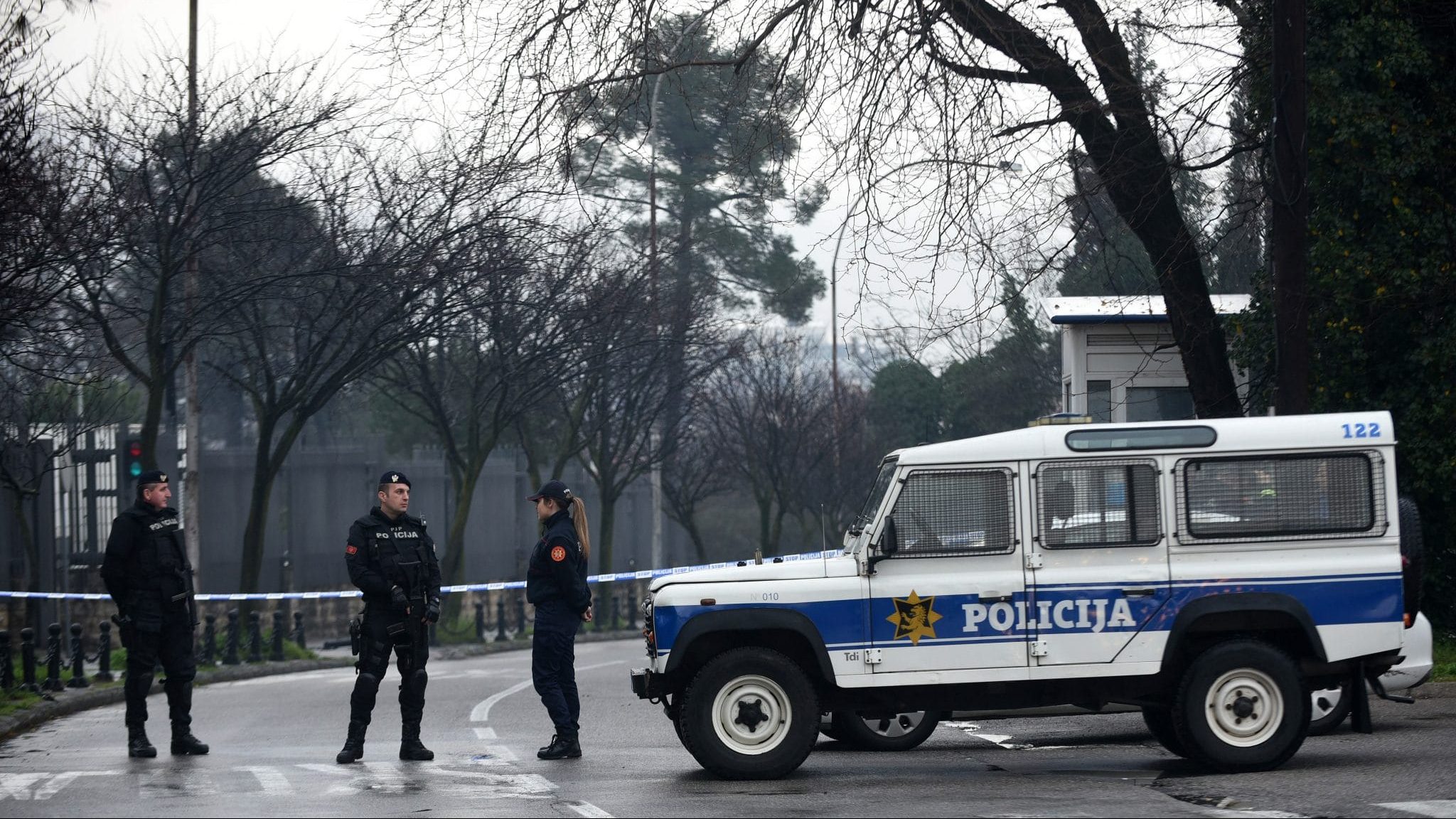
This month, police in Bosnia arrested eight minors on suspicion of sending hoax bomb alerts to schools; one minor sent 49 alerts in just 11 days. Despite being treated as minors, depending on their age, they could face potential prison terms of six months to three years.

Their parents also face criminal charges, while the authorities have the right to seek compensation for financial costs caused by the fake alerts.

But despite the latest arrests, hoax bomb alerts sent to Sarajevo schools have continued. In recent weeks, police in the Bosnian capital have been occupied with checking dozens of schools that have received threatening emails. In every case, the threat proved false.

“The threatening messages that the minors sent were shocking and we will not publish them. They are suspected of the crimes of endangering security and false reporting,” Azra Bavcic, from the Prosecutor’s Office of Sarajevo Canton, told BIRN.

Some hoaxes have had a major impact. Earlier in October, the Armed Forces of Bosnia and Herzegovina tightened security measures at barracks and other sites after receiving an email about a potential terrorist attack. According to media reports, the sender’s address was traced back to Bulgaria. An investigation is undergoing.

Hoax bomb threats have also forced Bosnian and Serbian authorities to evacuate main airports at Sarajevo and Belgrade, causing disruption to passengers.

In one incident targeting Belgrade airport as well as several schools and the Education Ministry in the Serbian capital, police identified a 12-year-old as the culprit and instigated action against the child’s parents.

Security expert Sasa Zivanovic, former head of the department for combating high-tech crime at Serbia’s Interior Ministry, lives in Belgrade, where more than 2,000 reports of falsely planted bombs were sent in 2023. Over 1,200 were sent to schools’ email addresses.

He explained why investigations in these cases are different from traditional ones. “In these cases, international legal assistance is requested, to collect evidence. That data is not located in Bosnia and Herzegovina, or in another country of the region, but on different servers around the world,” Zivanovic points out.

International legal assistance is needed to obtain data on the email address from which the threat has arrived. On that basis, data can be requested from the domestic providers on the device from which it was sent.

Signed agreements with large technology companies would speed up investigations into hoax bomb threats, he argues.

“Some countries have bilateral contracts or agreements with large Internet service providers such as Meta, X, or Google, which the police approach directly with a prosecutor’s order. This avoids the sluggishness that often characterizes international legal assistance,” Zivanovic notes.

Most threats sent by minors

An elementary school in the Montenegrin capital Podgorica that was evacuated after a false bomb alarm. Photo: BIRN/Samir Kajosevic.

In Montenegro, as in Bosnia and Herzegovina, police have established that most false bombs reports are sent by minors.

From 2022 to October 8, 2024, 170 bomb hoax threats were registered in Montenegro, according to data BIRN obtained from the police. All of them arrived via email. Most were sent to primary and secondary schools, but some also to courts.

Since 2022, police in Montenegro have solved 63 cases of false bomb reports and filed charges against seven minors and one adult for false reporting and causing panic. In the same period, police filed two misdemeanor charges against one minor and one adult.

Police said the false threats are often sent using email platforms that make it difficult to identify the users.

“Technology has advanced, especially with the use of AI. This complicates the collection of evidence, so a longer period of time is needed to identify and prosecute the perpetrators of these crimes,” police told BIRN.

Solving such cases, police added, requires exhaustive analyses and checks, which often require the involvement of international partner services and foreign companies. That is why they need additional time to solve those cases.

As most false threats are sent by minors, Zivanovic believes the remedy must include a proactive approach and conversations with youngsters.

“Some of the children who do this are not even aware of how much damage they are causing,” he says: “Certainly, their awareness has not been developed to that extent, and that is why we should discuss the consequences of those actions with them.”

Youngsters wanting to brag

Serbian police checking an Air Serbia plane at Belgrade airport in March 2022. Photo: mup.gov.rs

Police in Montenegro say their investigations have revealed various different motives for sending false bomb reports.

“From the cases solved so far, it can be concluded that these are mostly minors who do this to avoid tests at educational institutions, and often for fun,” they stated.

Copycatting accounts for some of the hoaxes, Zivanovic says. Some youngsters send threats because they want to stand out. “When a child connects to the internet, he has a dilemma about whether to be like everyone else or to be different, so he can boast,” he says.

“You also have the motive that, if someone needs to answer for some [court] case, he sends a threat to avoid it,” he adds.

Meanwhile, as cases continue to mount, police in Montenegro say that they plan to introduce an improved procedure for assessing reports. “On receipt of the report, the report itself – its contents and all its components – will be analysed, and then further action will be taken in terms of risk assessment,” the police explained.

Azem Kurtic contributed reporting to this feature from Sarajevo.

Europe’s Illiberal Leaders Embrace ‘Foreign Agents’ Laws as Tool to Stifle Criticism

“Those authoritarian regimes want to make these foreign agent laws to control media,” Mogens Blicher Bjerregard, a veteran Danish journalist and chair of the executive board of the ECPMF, told BIRN in Brussels.

According to human rights group Human Rights Watch, ‘foreign agent’ laws have become a preferred instrument for authoritarians to strengthen their hold on power. They are used to discredit critical voices by “equating them with promoting the interests of a foreign power”.

Democratic backsliding


Billionaire Bidzina Ivanishvili, founder of the ruling Georgian Dream party addresses a pre-election rally in Tbilisi, 23 October 2024. Photo: EPA-EFE/DAVID MDZINARISHVILI

While the United States has had a Foreign Agents Registration Act since 1938, requiring people lobbying or advocating for foreign powers to register, the model being emulated by countries like Georgia was developed in Russia much more recently, and is specifically used to muzzle dissent.

First enacted in 2012, the Russian law essentially requires any person or organisation receiving any form of financial support from outside the country to be declared a ‘foreign agent’ – a designation that has highly toxic connotations, dating back to the Soviet era – and to be subjected to additional controls, checks and regulations.

This idea has appealed to other governments who have been accused of democratic backsliding and are seeking to evade scrutiny – like the regime in Georgia, a country that was once seen as a bright example of democratic progress among post-Soviet countries.

“The government’s decisions that have been made in the last years have pointed a U-turn in the foreign policy vector. After Russia’s full-scale invasion of Ukraine, our government’s intention to forge closer ties with Russia, China and other autocratic regimes has become crystal clear,” Lia Chakhunashvili, executive director of the Georgian Chapter of Journalistic Ethics, told BIRN at the Media Freedom Rapid Response Summit.

Georgia’s ‘transparency of foreign influence’ law came into force was passed in June despite the mass protests against it.

“I believe that the government saw the law as an opportunity to silence critical voices, from corruption watchdogs to service providers, from community radios to investigative media, once and for good,” Chakhunashvili said.

The EU, which had granted Georgia membership candidate status in December 2023, froze the accession process in reaction to the adopted of the legislation. But the Georgian government insists that transparency about foreign funding for NGOs and media is necessary, so the public knows who is financing and influencing who.

Chakhunashvili explained that the government is targeting all NGOs, including privately-owned media outlets, which receive over 20 per cent of their funding from foreign sources. Many have said they will refuse to register in protest – but those that do not face punitive fines that could cripple them.

“If they decide to implement the law as written, some NGOs will be forced to self-liquidate and others will have to declare themselves insolvent,” she said.

In a relatively poor country, many non-government-backed or independent media rely on foreign grants for survival. If they are forced out of business, Chakhunashvili predicted, “the population will be left without reliable information coming from independent and critical media.”

She also warned that if oligarch Bidzina Ivanishvili’s ruling Georgian Dream party wins this weekend’s election, “the law will be a highly potent instrument that will help the government diverging the country from its Euro-Atlantic perspective to the Kremlin’s orbit”.

Escalating pressure

Hungarian Prime Minister Viktor Orban delivers a speech in Budapest, 23 October 2024. Photo: EPA-EFE/Szilard Koszticsak

Georgia is the most prominent case because of the mass protests against the ‘foreign influence’ law, which continued despite a police crackdown on demonstrators on the main street of the capital, attracting international media coverage. But strongman leaders in other countries have, less dramatically, pursued similar initiatives.

In December 2023, Hungary’s parliament passed a package of ‘sovereignty protection’ laws to curb foreign influence, which critics said could be used by Prime Minister Viktor Orban’s government to target dissenters.

Orban’s Fidesz party argued that the laws were necessary to stop opposition parties receiving foreign funding. They include the creation of a ‘sovereignty protection office’, a government authority that can gather information about people or organisations that receive money from outside Hungary.

The European Commission announced this month that it is taking Hungary to the EU’s Court of Justice, arguing that the ‘sovereignty protection’ laws breach some of the bloc’s fundamental rights and freedoms.

“The broad powers and discretion of the [sovereignty protection] office will affect a wide range of persons and entities, including civil society organisations, media outlets and journalists in a disproportionate manner,” it said.

In another EU member state, Bulgaria, pro-Russian right-wing party Revival has pushed for a ‘foreign agents’ law that would effectively sanction certain NGOs and media outlets that are funded from abroad, but without success so far. However, Revival’s rising popularity ahead of Bulgaria’s parliamentary elections on Sunday has increased concerns that the party might try again if it gains more representation in parliament.

A similar law was also proposed in Republika Srpska, the Serb-led entity in Bosnia and Herzegovina, sparking criticism that it would limit freedom of expression. The legislation was intended to restrict non-profit organisations from engaging in “political activities”, mandate their enrolment in a special registry and subject them to increased legal oversight. Under the law, the Republika Srpska government could declare them “agents of foreign influence”.

However, the law was then withdrawn in May, citing the need for further harmonisation with European standards, although this was not clearly explained.

Meanwhile, the EU has also been considering whether to adopt a ‘foreign agents directive’ to address political interference by countries like Russia intended to subvert democracy in Europe. Civil rights organisations were highly critical of the idea, arguing that it could curb freedom of speech and undermine the EU’s credibility as a champion of democratic values.

“Ironically, this directive it was made to control third-party influence, specifically Russian influence, but when you read the directive and some of the requirements, it is very similar to the law that was proposed in [Republika Srpska],” Ena Bavcic, lead researcher at BIRN’s Digital Rights Programme, said at the Media Freedom Rapid Response Summit.

A similar law was put on the parliamentary agenda for discussion in Turkey in May. The planned ‘agents of foreign influence’ law threatened prison sentences for people involved in producing propaganda for a foreign actor. This would represent a further blow to the freedom of the country’s embattled media, as well as to civil society in general, experts argue.

“It is clear that the pressure targeting media and civil society in Turkey has been escalating for over a decade. The survival of these sectors has been under severe threat for a long time,” Gurkan Ozturan, media freedom monitoring officer at the European Centre for Press and Media Freedom, told BIRN.

The law was withdrawn following criticism, but then submitted to parliament again on October 18. This time, however, the proposal is back on the parliamentary agenda as part of a different legislative package.

“The unofficially labelled ‘agents of foreign influence’ law is now being taken into a legislative framework to officially criminalise the works of independent journalists or CSOs [civil society organisations] whenever they reveal major wrongs in society or governance,” Ozturan said.

“It will restrict the independent media and civil society even further, which is a very risky move when we consider it in the context of the wider process of democratisation,” he added.

Mark Dempsey, senior EU advocacy officer at UK-based media freedom organisation Article 19, said that some European parliamentarians have indulged illiberal tendencies among member states. He gave the example of Hungary and how it was tolerated by the powerful centre-right European People’s Party, EPP bloc in the European parliament when democratic backsliding started under Orban’s government in Budapest.

“I think we have a weak leadership at the centre of Europe. We have a parliament leaning to the right and we have an EPP party which has a history, in order to secure its power base and its numbers in the parliament, of allowing this gradual backsliding,” Dempsey told BIRN.

But in the long run, the adoption of laws labelling NGOs and independent media ‘foreign agents’ can damage EU aspirant countries’ hopes of joining the European bloc – as the example of Georgia has highlighted.

Campaign groups in these countries should do more to highlight what this means for the future, Dempsey urged: “I think in accession countries, there has to be mobilising on the ground among civil society organisations about what a future in Europe means versus what a future outside of Europe means.”

€2 Million EU-Funded Database of Serbian Mining Waste ‘Incomplete’

In early 2020, headlines in Serbia lauded the creation of Serbia’s first database of mining waste, a 2.1 million-euro project 90 per cent funded by the European Union. The country’s mining and energy ministry said Serbia at last had “a clear picture of mining waste” as the first step to dealing with it and protecting the environment.

More than four years later, that picture does not look so clear.

Until recently, the online application presenting the Cadastre of Mining Waste to the public and published on the website of the Ministry of Mining and Energy contained only limited data on 41 abandoned mining waste dumps and nothing on active mining sites. The project was supposed to bring together data from hundreds of locations across the country.

A BIRN investigation found that more detailed data on far more dumps was available on the publicly accessible server of the ministry’s website in machine-readable format. This data showed that among the abandoned dumps are sites containing hazardous waste, some in areas currently at risk from landslides.

It is unclear whether this data was up to date and valid or if it was collected as part of the Cadastre project.

In December 2022, Serbia’s State Audit Institution put it bluntly: “The mining waste management system in Serbia is not effective,” it said in a report, adding that “a unified database on mining waste has not been established”.

Dragana Nisic, a professor at the Department of Occupational Safety and Environmental Protection at the Faculty of Mining in Belgrade, said the Cadastre of Mining Waste should be expanded, primarily to include active mining waste dumps, and brought into line with the regulation on waste management permits.

“Each dump should include data on the nature of the waste, the quantity of waste deposited, the ore from which the waste is generated, the risk of accidents, etc.,” Nisic told BIRN. In the interests of better public awareness, all data should be “fully transparent”, she said.

“In its current form, the Cadastre does not meet these needs.”

The German companies Plejades and DMT, which won the tender to create the cadastre, did not respond to requests for comment for this story. Neither did the ministry or the EU Delegation. After BIRN wrote to the ministry, all the data disappeared, both from the online application and from the server of the ministry website.

Data confusion

Mining waste has become a hot topic in Serbia since protests erupted in 2021-2022 over plans by mining giant Rio Tinto to mine for lithium in the country’s western Jadar valley.

In 2016, Plejades and DMT won the tender to create the Cadastre of Mining Waste, a project launched the following year when the Serbian government announced the risk assessment, characterisation and classification of mining waste at between 200 and 250 abandoned mining dumps and more than 200 active mines.

According to the EU’s website in Serbia, experts visited 250 abandoned mining waste sites and identified 150 dumps containing a total of some 24 million cubic metres of waste.

Forty-one dumps accounted for roughly 80 per cent of the total mapped waste; these were subjected to closer examination, with soil sampling, chemical analysis, testing of ground and surface water and stability assessments.

The EU said in a press release that the data obtained would be presented in the form of a web application and a book containing both the locations of active mines and locations of abandoned mining waste.

In late 2019, Peter Bayer, the project leader from Plejades, said that the results at that point showed that in most cases the dumps had had a negative impact on ground and surface water.

In 2024, however, the online application of the Cadastre of Mining Waste still contained only a fraction of the data that was collected – basic details about 41 abandoned dumps.

BIRN submitted a Freedom of Information request asking the ministry for all available data from the Cadastre. The ministry provided the same data that were until recently available on the site.

map visualization

However, more comprehensive and detailed sets of data on waste dumps were present on the publicly accessible server of the ministry website.

This data included whether the site contains hazardous or non-hazardous waste, the amount of waste material, whether there is a landslide risk, and whether the dump has been reclaimed, i.e. brought to a state that allows for another use.

Additionally, unlike the web application, these data sets include information on active dumps.

When asked by BIRN how the data was obtained, whether it is valid and why it not available to users of the Cadastre app, the mining and energy ministry said it was unable to provide such information and that the link to the data set on their server supplied by BIRN was not on its website.

chart visualization

An analysis of the data from the server of ministry website shows some locations are marked as hazardous waste dumps

map visualization
chart visualization

In terms of volume, the largest quantities of hazardous mining waste are located in the municipalities of Raska, Aleksinac, and Brus.

map visualization

Several dump locations near Krupanj, Cajetina, Prijepolje, Raska, Boljevac and Majdanpek are noted as being at risk of landslides.

State Auditors: Data ‘incomplete’, often ‘incorrect’

The Law on Mining and Geological Research, passed in 2015, stipulates that the Ministry should maintain a cadastre of mining waste dumps and mining waste must be managed based on a permit; the regulation on issuing such permits was passed in 2017 and has been in force since January 1, 2020, with all legal entities required to align their operations with the law within two years of its implementation.

At the end of 2022, however, the State Audit Institution said that mining waste in Serbia continued to be disposed of without valid permits and that no unified database had been established.

“There is no electronic or other database on the total amounts of mining waste and mineral resources, nor on the amounts by types and categories,” the State Audit said in its Performance Audit Report: Hazardous Waste Management.

Instead, companies engaged in mining in Serbia submit data on mining waste to the ministry as part of their Annual Business Reports in paper form, which the ministry then scans. The auditors said this data is “incomplete” and that the ministry does not verify the reported quantities of waste.

“The data in the reports of the exploitation holders are incomplete, often with incorrect unit measures and numerical data,” the report states. “The reported quantities based on the given forms are not controlled, and there is no tracking and control of the quantities of excavated and deposited materials of all exploitation products.”

“Of the 674 approved exploitation fields, data on the generated quantities of mining waste were provided to the competent authorities from 193 exploitation fields, which creates a risk that data on the total quantity of mining waste are not comprehensive.”

In the report document, the auditors cite legal provisions requiring the ministry to maintain a Cadastre of Mining Waste Fields and that, “according to the statement of the responsible person at the Ministry, the mining waste fields cadastre is available at https://gis.mre.gov.rs/jkro/.”

However, at the time of publication of this text, the web address displays only a server error message.

No waste management permits in effect

At the time the State Audit Institution published its report, only one operator was managing and disposing mining waste based on a permit issued by the ministry – Serbia Zijin Mining d.o.o. for its Cukari Peki gold and copper mine near Bor.

The Zijin permit was issued in 2021 but, when the company asked to update the permit in 2023, the ministry refused, saying Zijin had failed to submit the necessary documentation.

The ministry told BIRN that, “currently, there are no valid permits for the disposal of mining waste”.

Nisic, from the Faculty of Mining, said that, to her knowledge, most operators had requested permits.

“Some have been waiting for more than two years for a response from the ministry,” Nisic told BIRN.

According to the audit report, at least 20 operators are “disposing of and managing potentially hazardous mining waste without a permit for managing mining waste”.

“Certain types of waste may contain hazardous substances,” the report adds, and “excess excavated rock mass or tailings can be stored in heaps and reservoirs surrounded by dams, which, in the event of collapse, could have significant environmental, health, and economic consequences”.

The ministry told BIRN that operators dispose of mining waste “in accordance with the approved technical documentation issued in accordance with the provisions of the Law on Mining and Geological Exploration”.

When BIRN asked again, based on the Freedom of Information Act, what is the purpose of the permits if operators can manage waste without them, the ministry said BIRN was asking for an “opinion” rather than for information of public importance and said a response would require BIRN to pay a 2,010 dinar administrative fee. BIRN paid but the ministry had yet to answer by the time of publication.

table visualization

Overall data per company: https://public.flourish.studio/visualisation/19747014/

chart visualization

Quantities of overburden per company: https://public.flourish.studio/visualisation/19746960/

chart visualization

Quantities of gangue per company: https://public.flourish.studio/visualisation/19747001/

Nisic stressed that the absence of permits does not mean mining waste is being handled irresponsibly.

“From my professional experience, I can assert that mining waste in Serbia is managed responsibly, as evidenced by the fact that Serbia is one of the countries with the lowest rate of incidents at mining waste disposal sites in Europe and beyond,” she said.

“Before the country adopted a regulation requiring permits, there was no practice or legal obligation to obtain a permit for managing mining waste,” Nisic told BIRN. At the time, the disposal of mining waste was carried out regularly, in a fully planned manner, in accordance with legal regulations; it’s just that the formal document called a ‘permit’ did not exist.”

Bosnia Arrests Five Minors Over Spate of Hoax Bomb Alerts


Police in Sarajevo. Photo: Interior Ministry of Sarajevo Canton. 

Police in Bosnia’s capital Sarajevo over the past three days have arrested five minors on suspicion of sending hoax bomb alerts to schools by email.

Out of the five, the Prosecutor’s Office of Sarajevo Canton has sought a month’s detention for one of them. A court in Sarajevo was due to make a decision on Thursday, but was evacuated that morning, also due to a bomb alert. 

Besides the court, similar warnings were sent to several schools. 

“The minor is suspected of sending 49 bomb alerts over 11 days prior to his arrest on Monday,” Azra Bavcic, Prosecutor’s Office spokesperson, told BIRN. 

“Two others are currently in prosecution and we are waiting to see what the prosecutors will propose to the court,” Bavcic added. 

Two of the minors arrested on Wednesday are undergoing criminal processing. All five are suspected of endangering safety in connection with the crime of false reporting. Despite being treated as minors, depending on their age, they face potential prison terms of six months to three years. 

In recent weeks, Sarajevo police have been occupied with checking dozens of schools that have received threatening emails. In every case, the threats proved false. 

However, the threats meant that the schools had to be evacuated, while parents had to leave their workplaces to pick up their children. Every intervention implies significant costs to the public budget, as they activate emergency services. Some schools have decided to switch to online classes due to the increased number of bomb reports. 

Besides schools, the three biggest shopping malls in the capital, Sarajevo Airport and the country’s presidency building also had to be evacuated due to hoax bomb alerts. 

The armed forces have tightened security at military objects and barracks after receiving a report of a potential terrorist attack. That email address was traced back to Bulgaria. The investigation is currently undergoing. 

Threats to Internet Freedoms Persist in Turkey and Serbia, Report Warns

Illustration: Unsplash/Allison Saeng

Washington-based rights organisation Freedom House’s latest report on internet freedoms worldwide, published on Wednesday, warned that in south-east Europe, censorship and misinformation are persistent problems in Turkey and Serbia.

Online liberties in Turkey remain threatened by the actions of the government, Freedom House’s Freedom on the Net 2024 report said.

“Internet freedom in Turkey remains under threat even though the country has observed a single point overall increase in this year’s analysis, due to the absence of a natural disaster that devastated the infrastructure, as in years before,” Gurkan Ozturan, Freedom House’s Turkey rapporteur, told BIRN.

Ozturan noted that many violations reported during election periods but this is not the only major issue.

“There were many cases of digital violations during the election process, including blocking access to news outlets. Regarding the elections in May 2023, other cases of violations were detected retrospectively during the reporting period,” Ozturan said, underlining the increase in access blocks of news articles and other content, as well as access blocks of digital platforms.

According to the report, Turkey stood out with negative examples in all five categories of arbitrary access blocking, blocking of social media and communication, blocking of access to news, and arrests and physical attacks on users. Turkey “set a bad example for the rest of the world,” Ozturan said.

People in Serbia also suffered from a politically manipulated online space, particularly during elections, the report said.

“Ahead of Serbia’s December 2023 elections, pro-government tabloids published false and misleading information about the opposition and independent media, including a fake video purporting to show the political opposition buying votes. These campaigns disproportionately target women who play a prominent role in political processes,” it alleged.

The report highlighted that activists in Serbia were targeted with spyware, and that journalists continue to face strategic lawsuits against public participation, or SLAPPs.

Freedom House said that in general, freedoms on the net have been curbed around the world.

“A rapid series of consequential elections have reshaped the global information environment over the past year. Technical censorship curbed many opposition parties’ ability to reach supporters and suppressed access to independent reporting about the electoral process. False claims of voter fraud and a rise in harassment of election administrators threatened public confidence in the integrity of balloting procedures,” the report said.

Voters in at least 25 of 41 countries covered by the Freedom House report that held or prepared for nationwide elections during the coverage period contended with a censored information space, it added.


‘On Political Orders’: Turkish Reporter Refuses to be Silenced by Censors

The use of court orders to block online content in Turkey skyrocketed last year, according to Free Web Turkey, which was established by the Media and Law Studies Association, MLSA, to monitor online censorship in Turkey. [The author of this article is coordinator of Free Web Turkey.] The courts tend to cite violations of an individual’s rights, threats to national security and public order, or disinformation.

Soykan has become a regular target.

“If he hadn’t made it his mission to expose the dirty dealings of the government and power centres, he wouldn’t have faced any of these blocks,” said Turkish media ombudsman Faruk Bildirici.

“Soykan is making some people uncomfortable,” he told BIRN, and the courts “have become a weapon of political power to obtain access bans.”

Bildirici said courts appear to issue blanket bans without checking what they are banning.

“We sometimes see that dozens of access block requests are accepted in such a short time that it would be impossible to verify all the links.”

Court bribery exposed

Four journalists who were threatened by Turkish far-right leader Devlet Bahceli (right to left): Murat Agirel, Sule Aydin, Baris Pehlivan and Timur Soykan. Photo: Timur Soykan

A graduate in Radio, Television and Cinema from the Faculty of Communication, Marmara University, 49-year-old Soykan worked for the newspapers Yeni Yuzyil, Radikal and Posta and is currently a columnist for BirGun daily and a commentator on Halk TV.

For years he has focussed his attention on bribery, corruption and organised crime and their ties to the state, earning the 2021 Transparency Award from the International Transparency Association and the 2022 Press Freedom Award from the Turkish Press Council.

In 2020, his reporting exposed ties between a number of judiciary officials and international crime bosses; in 2022, he wrote about the case of a 14-year-old girl forced into marriage when she was just six years old with a 29-year-old member of a religious sect. His report led to the prosecution of three people, who were sentenced to a total of 72 years in prison in December 2023.

Then in October 2023, Soykan reported that judges and prosecutors at Istanbul’s Anatolian Courthouse had taken bribes; one of them, Judge Sidar Demiroglu, was later dismissed.

Soykan’s achievements, however, have not come without a cost, from death threats to lawsuits.

For his report on the six-year-old girl forced into marriage, Soykan was threatened by people affiliated with the sect. Its supporters launched a campaign calling for his arrest.

In September this year, while attending a hearing in the trial for the murder of Sinan Ates, leader of the ultra-nationalist Grey Wolves, the accused hitman, Eray Ozyagci, threatened Soykan in court, according to witnesses.

The Grey Wolves are affiliated with the far-right Nationalist Movement Party, MHP, a coalition partner of Turkey’s ruling Justice and Development Party, AKP. There was a flurry of speculation at the time of the Ates murder in December 2022 that he may have been killed by his own people after falling out with the MHP.

Addressing parliament on October 1, MHP leader Devlet Bahceli said in reference to Soykan and three other journalists: “Watch your step! We will not allow MHP to be interrogated by four clown reporters.”

Years of media repression

Turkish President Recep Tayyip Erdogan at a press conference in Berlin, November 2023. Photo: EPA-EFE/FILIP SINGER

Despite the death threats and hostility, Soykan says what worries him most is the censorship, on top of years of intense media repression under Turkish President Recep Tayyip Erdogan.

Soykan’s story about bribery at the Anatolian Courthouse was blocked by court order just a few hours after it was published, at the request of Istanbul Justice Commission President Bekir Altun, one of those accused of taking bribes for favourable verdicts.

By extension, 77 reports by other outlets and which cited Soykan were also blocked.

Soykan said the court acted “on political orders”.

The judge who blocked Soykan’s reports, Demiroglu, was later dismissed for taking bribes in exchange for issuing such blocks.

Soykan said the authorities were trying to “destroy evidence-based news in a manner that completely disregards the law”.

Readers, however, still search out his work.

“They remove the reports from all platforms and many people reach out to us saying they can’t find our reports,” he said. “We then send the reports via WhatsApp or email, and that’s how they read them.”

Describing criminal court judges as “censorship officers,” Soykan said: “We are living through one of the darkest periods in Turkish press history. Censorship has now become institutionalised.”

Turkey Blocks Access to Discord Online Platform Citing Child Safety Concerns

Illustration: Unsplash/Alexander Shatov

Turkish Justice Minister Yilmaz Tunc announced on Wednesday that Discord, an instant messaging and social media platform, has been blocked in Turkey by a court order.

“A decision has been made to remove all publications from content and block access from Turkey to the specified URLs due to sufficient suspicion of the crimes of ‘child sexual abuse and obscenity,’” Tunc said on his X account.

Tunc insisted that the decision has been made to protect children.

“We are determined to protect our youth and children, the guarantee of our future, from harmful and illegal content on social media and the internet,” Tunc added.

Following the brutal murder of two young women over the weekend, the minister ealier announced that an investigation has been launched into groups that allegedly create and spread content on Discord containing violence, extortion, and sexual assault against children and women.

It has been revealed that the Semih Celik, who murdered the two 19-year-old women and then killed himself, was in contact with these groups, also known as “incels” or “involuntary celibates” in English.

Interior Minister Ali Yerlikaya on Wednesday said that two children had been taken into custody after it was determined that they were the moderators of a group that allegedly spread content containing sexual abuse against children.

On the same day that Turkey blocked access to Discord, Russia also blocked access to the platform, claiming the network had failed to comply with Russian laws against recruiting “terrorists and extremists”, TASS news agency reported.

Turkey has previously blocked many social media platforms, including YouTube, Threads, EksiSozluk, Wikipedia, Twitter and TikTok. It has also imposed social media and broadcasting bans following disasters, terror attacks and social unrest.

Users in Turkey now cannot access Discord via web and mobile applications due to the ban. Access is still possible via VPN services.

Montenegro’s Proposed New Cybersecurity Structure Raises Concerns

Information security expert Branko Dzakula also called for clarification of their roles.

“The CIRT should be focused on protecting only state infrastructure, while the Agency could have a broader role in protecting the wider cyberspace, including the private sector,” Dzakula told BIRN. “Such a division could increase efficiency, strengthen coordination between these institutions and avoid conflicts of jurisdiction or duplication of tasks.”

He also questioned whether the law could be implemented in practice.

“Montenegro’s cyber security index significantly lags behind the European Union average and there are traditional problems with financial, technical, and human resources,” Dzakula said. “It’s debatable whether the public and private sectors can adequately implement the new requirements in practice.”

Draft law ‘aligned’ with 2022 EU directive

The 2024 Global Cybersecurity Index, published by the UN’s International Telecommunication Union, ranks Montenegro’s information security level as ‘establishing’, the third tier of five.

That puts it on a par with the likes of Bulgaria, North Macedonia and Ukraine but behind the ‘advancing’ countries such as Croatia, Albania, Israel and Switzerland. Fellow ex-Yugoslav republics Serbia and Slovenia are in the highest tier – ‘role-modelling’ – alongside Britain, Germany, France and others.

Montenegro’s vulnerability was exposed in August 2022, when the government server was hit with ransomware, which locks and encrypts the victim’s data and critical files and demands payment to unlock and decrypt them.

The attack took offline a number of ministries, the Property Administration, the Revenue and Customs Administration and courts.

A hacker group called Cuba-Ransomware claimed responsibility but authorities have never officially identified the perpetrator. A report by experts from the US Federal Bureau of Investigation, FBI, was submitted to Montenegrin police in January 2023 but it has yet to be published.

Since 2012, when it was established, the CIRT has operated under the Directorate for the Protection of Secret Data, whose head is nominated by the defence minister, and is responsible for all cyber security incidents in Montenegrin cyberspace.

Under the draft law, the CIRT will come under the Ministry of Public Administration and protect only the state administration’s information system from cyber threats.

Dusan Polovic, head of the state Directorate for Infrastructure, Information Security, Digitalisation and e-Services, told BIRN that the draft law is aligned as much as possible with the EU’s NIS2 Directive, adopted in November 2022 to raise the overall level of cybersecurity in the bloc, which Montenegro is seeking to join.

Montenegro needs to adopt the law, he said, to meet the demands of Chapter 10 accession negotiations with the EU concerning Information Society and Media.

“The focus of this law is on transposing as much as possible the NIS2 EU Directive that defines this area, taking into account Montenegro’s obligations in the accession process,” Polovic said. “This law also falls under Chapter 10, which Montenegro aims to close as soon as possible.”

Risk of undue political influence

Montenegrin Directorate for Infrastructure, Information Security, Digitalisation and e-Services chief Dusan Polovic (R). Photo: Government of Montenegro

Montenegro’s 2022-26 National Cybersecurity Strategy calls for a Cybersecurity Agency as an umbrella body responsible for state cybersecurity, within which the CIRT would operate.

The draft law is not completely aligned with the Strategy, Polovic said, in that it calls for the CIRT to be placed under the Ministry of Public Administration and to operate separate from the Cybersecurity Agency. Polovic said this was “absolutely necessary”, “rational” and “efficient”.

According to the draft, the head of the Cybersecurity Agency will be appointed by the agency’s Council, which will have a president and four members appointed by the government.

The Ministry of Public Administration will propose the president of the Council, while the University of Montenegro, the Chamber of Commerce, the Montenegrin Academy of Sciences and Arts, and the Agency will each nominate one member for approval by the government.

Dzakula warned that the process risked stuffing the agency with political appointees, given that all four institutions are considered close to the authorities and are dependent on public coffers for their funding.

“Given the crucial role the agency will play in protecting state infrastructure and the broader cyberspace, it is imperative that its composition is based on expertise, experience, and impartiality, not on political criteria,” Dzakula said.

He called for a “transparent and rigorous selection process” to ensure the appointment of experts “with proven cybersecurity experience”.

“Politically motivated appointments could undermine the credibility and efficiency of the agency,” he added.

Last year, during a public debate on the draft, IT experts and organisations called for the agency’s Council to include at least one member from the cybersecurity expert community but the ministry rejected this.

Polovic insisted the Cybersecurity Agency would have a “professional and well-paid staff” free of political influence.

Concerns over supervisory powers

Montenegrin information security expert Branko Dzakula. Photo courtesy of Branko Dzakula

Dzakula also raised concerns about data privacy under the new law, which, he said, introduces broad powers for supervisors at the Cybersecurity Agency in assessing IT security at a given body, which is obliged to give them access to IT equipment and requested data. Some experts are concerned that the draft has not been aligned with the Personal Data Protection Law, which stipulates that personal data cannot be processed in a greater scope than necessary for any given purpose.

“It is crucial to balance strengthening cybersecurity and preserving privacy rights,” Dzakula said. “It is necessary to ensure that supervisory powers are clearly defined to avoid potential abuse or excessive oversight.”

The Agency for Personal Data Protection and Free Access to Information told BIRN that it had not received the draft law for review and that it had not been officially contacted by the Ministry of Public Administration.

Polovic said: “Implementing information security standards prescribed by the law and expert supervision are very important. The obligation of two-way cooperation between inspectors and supervisors is clearly defined.”

According to a Ministry of Finance estimate, implementing the new law will cost 2.62 million euros.

Dzakula questioned the outlay, “in a country like Montenegro”, where human and financial resources are limited.

Forming new bodies like CIRT “could lead to unnecessary resource wastage,” he said.

“It would be more rational for the Cybersecurity Agency to integrate a special department dedicated to protecting state institutions, thereby achieving better coordination and resource savings.”

Digital Rights Review: August Marked by Online Bans and Pressure on Protesters

The pressure comes at a precarious time for the digital environment in Turkey, where  BIRN digital rights monitoring has witnessed a surge in government bans on social media platforms, as well as individual accounts.

Turkey expedites platform bans

Supporters of the pro-Kurdish Peoples’ Democratic Party at a rally in Diyarbakir, Turkey, March 2023. Photo: EPA-EFE/SEDAT SUNA

In an unprecedented move, eighty-two accounts on X operated by Kurdish politicians, journalists, publishers and media houses have been blocked in Turkey by a court for “making terrorist propaganda”.

The X account owners include the honorary president of the pro-Kurdish Peoples’ Democratic Party (HDP), Al Monitor’s chief correspondent Amberin Zaman, the Yeni Yasam newspaper and Cansu Ozdemir, who leads the Left in Hamburg and has been a member of Hamburg’s parliament since 2009.

It came amid a series of website bans by Turkish institutions across August. Following a ban on global story-sharing platform Wattpad in July, the national communications regulatory agency blocked access to Instagram on August 2 without stating the reason or duration of the ban.

It was later revealed that Instagram had been blocked over its failure to remove illegal content on matters such as “the sexual abuse of a child”, “insulting Ataturk [the founder of Turkey]”, and items on “gambling and drugs”. Following discussions between META and the Turkish government, the access ban was lifted on August 10.

The Istanbul municipal statistical agency, however, said that Turkey’s decision to block Instagram caused daily economic loss of about 52.1 million euros. Businesses, citizens, and social media influencers were financially affected by the ban. More than 10 per cent of total e-commerce in Turkey is conducted on social media, according to the Electronic Commerce Operators Association’s Board of Directors Vice President Emre Ekmekci.

The content removals also involved META, which shadowbanned several posts following the assassination of Hamas leader Ismail Haniyeh in Iran. META removed content including that on respected independent media outlet T24.

However, the ban by the Turkish government on Instagram was not the final one. A court in Turkey blocked the popular gaming platform Roblox for allowing content that could allegedly “lead to child abuse”.  Though the decision does not cite the link between the platform and potential child abuse, some experts believe it is linked to previous complaints around child safety relating to private chatrooms and other features the platform offers.

Meanwhile, Turkey’s Information Technologies and Communication Authority blocked the domain of the Read the Docs platform, which offers online documentation creation and hosting services for software projects. Readthedocs.io was blocked on the grounds of alleged illegal gambling, though evidence of the link remains undisclosed.

Serbian activists pressured for supporting environmental protests


Protesters march during a rally in Belgrade against plans to start mining lithium in Serbia, August 2024. Photo:  EPA-EFE/ANDREJ CUKIC

The June announcement of lithium exploration licences for the Anglo-Australian corporation Rio Tinto prompted protests around the area of Jadar, where mining for the metal is set to take place.

Protests over the granting of licences spread across the country in the following months, peaking in August, when thousands gathered in Belgrade to oppose the mining plans.

BIRN Digital Rights Monitoring has recorded at least three instances of pressure by the government and other unidentified individuals against journalists, researchers and activists, who are linked to the protests and who have published investigations into lithium mining online.

United Media, which operates the media outlets N1, Nova, Danas, and Radar, alerted the public and international community about the latest alleged government smear campaign against their group, which they see as an attack on independent media in Serbia.

They claimed that in the most recent incident Serbia’s president and premier publicly accused the director of the media group of plotting the president’s murder.  The pressure intensified in recent weeks following the nationwide lithium mining protests.

Aleksandar Matkovic, a research associate at the Institute of Economic Sciences in Belgrade, received death threats on his Telegram app a few days after publishing an article about lithium on the Danas newspaper’s website. “One of them was written in German. It mentions the murder of my younger brother and demands that I withdraw from public [life] if I want to continue breathing and writing,” Matkovic said.

Additionally, police questioned activist Ivan Bjelic over an Instagram post casting doubt over the legality of the Jadar lithium mining project. After speaking at a protest in Gornji Milanovac against the mine, officers asked him, along with the organiser, to make a statement at the police station. There, he was told a warrant had been issued to search his home over the Instagram post which reported that the constitutional court had declared the Jadar project unconstitutional, the activist said.

Police told him that this was deemed a call for the violent overthrow of the constitutional order of Serbia. The activist noted that they asked him to show the post – which they photographed – and checked his phone to see if he had other accounts on Instagram.

Monitoring: Turkey was covered by Hamdi Firat Buyuk, Serbia by Tijana Uzelac, North Macedonia by Bojan Stojkovski and Goce Trpkovski, Bosnia and Herzegovina by Elma Selimovic, Aida Trepanic and Sara Velaga Drek, Kosovo by Flaka Fazlija, Montenegro by Djurdja Radulovic, Croatia by Katarina Gulan, Romania by Adina Florea, Albania by Nensi Bogdani, Hungary by Akos Keller-Alant.

BIRD Community

Are you a professional journalist or a media worker looking for an easily searchable and comprehensive database and interested in safely (re)connecting with more than thousands of colleagues from Southeastern and Central Europe?

We created BIRD Community, a place where you can have it all!

Join Now